Blog Post
Is It Freeze, Willfulness, or Both? That Stuck, Dug-In Feeling When We Get Triggered

Have you ever felt that heavy, immovable sensation in your chest or your limbs when someone says something that triggers you? It’s that moment where your mind or your body just says “no.” You might find yourself staring blankly, or maybe you’re mentally digging your heels into the ground so hard that it feels impossible to take a single step forward. Is it freeze, or is it willfulness? In DBT, learning to tell freeze vs willfulness apart is where the shift begins.
I’ve been teaching DBT skills for over 13 years at DBT Path, and I still experience this. Even as an educator and someone who lives and breathes these skills, I’m still learning, healing, and growing right alongside my students.
Lately, life has been incredibly heavy. My mother is currently in hospice, and the stress of that situation ripples through my entire family. When I’m around a specific family member whom I have always struggled to get along with, that “stuck” feeling comes back with a vengeance.
Freeze vs Willfulness in DBT: Understanding the “I Will Not Move” Feeling
When we get triggered, we often collapse into a state of “no.” We might call ourselves stubborn, or others might call us difficult. In DBT Path classes, we look at this through a much more compassionate lens.
We need to be able to tell the difference between a nervous system response and a mental stance. It’s often not just one thing, but a braid of both. Understanding the difference between freeze and willfulness is the first step toward finding your way back to yourself.
1. The Freeze Response: When Your Body Decides for You
The freeze response is an automatic, involuntary survival reaction. It isn’t a choice, and it’s certainly not a character flaw. It’s your nervous system deciding that the situation is so overwhelming that the safest thing to do is to shut down and become immobile.
When I’m spending time with my mom, the emotional weight is sometimes more than my system can process. If that certain family member starts a conflict in that high-stress environment, my body often goes into a literal freeze. My thinking becomes foggy, my heart rate actually slows down, and I feel like I’m observing the situation from behind a thick pane of glass.
In these moments, I sometimes feel completely powerless to speak up even though I am a grown woman with a lifetime of tools.
If you’re in freeze, you aren’t being “difficult.” You’re being protected by a system that thinks you’re in mortal danger. You can’t simply “think” your way out of a physiological shutdown.
2. Willfulness: The DBT Concept of “No”
Then there’s willfulness. In DBT, willfulness is a mental stance where we refuse to tolerate or work with reality as it’s. It’s the opposite of willingness.
Willfulness sounds like:
- “I shouldn’t have to deal with this.”
- “I’m right and they’re wrong, so I’m not moving.”
- “I refuse to use a skill because it won’t work anyway.”
Willfulness is like trying to stop a river by standing in the middle of it and shouting at the water. It’s exhausting, and it usually only hurts us.
I notice my own willfulness most sometimes with my spouse. He’s a wonderful man, but sometimes my old “stuff” gets kicked up. I might be reacting to a tone of voice or a look that reminds me of a past hurt that has nothing to do with him or his actual intentions in the moment.
I’ll catch myself sitting there, feeling physically unable to get up and give him a hug or to say the words that would help repair in the moment, and mentally, I’m crossing my arms and saying, “Why should I give in?!”
3. The Mix: How They Braid Together
This is where it gets complicated. Often, we start in a freeze response because we’re triggered and overwhelmed. But once the initial shock wears off, willfulness steps in to keep us there.
Our body freezes, and then our mind decides to stay frozen as a way to stay “safe” or to punish the other person. Or, our willfulness keeps us so tense and stressed that we stay locked in a physiological freeze state long after the actual threat has passed.
Neither of these is a moral failing. They’re just human ways of trying to cope with pain.
How to Soften the Freeze and Shift the Willfulness
When you realize you’re stuck, you don’t have to stay there. At DBT Path, we teach specific skills to help you thaw out and find your flow again.
TIPP: Bring Your Body Back
If you’re in a true freeze state, you need to talk to your body first. The TIP skill (sometimes called TIPP) uses physiology to change your emotional state.
- Temperature: Splash cool or cold water on your face to trigger the dive reflex and gently guide your nervous system out of freeze. Keep it gentle. Skip this skill or check with your doctor first if you have a heart condition, a slow heart rate, an eating disorder, or any other medical concern.
- Intense Exercise: If you can move at all, do ten jumping jacks or a quick, fast walk.
- Paced Breathing: Slow down your exhale so it’s longer than your inhale. This tells your brain that you’re safe.

Willing Hands and Half-Smiling
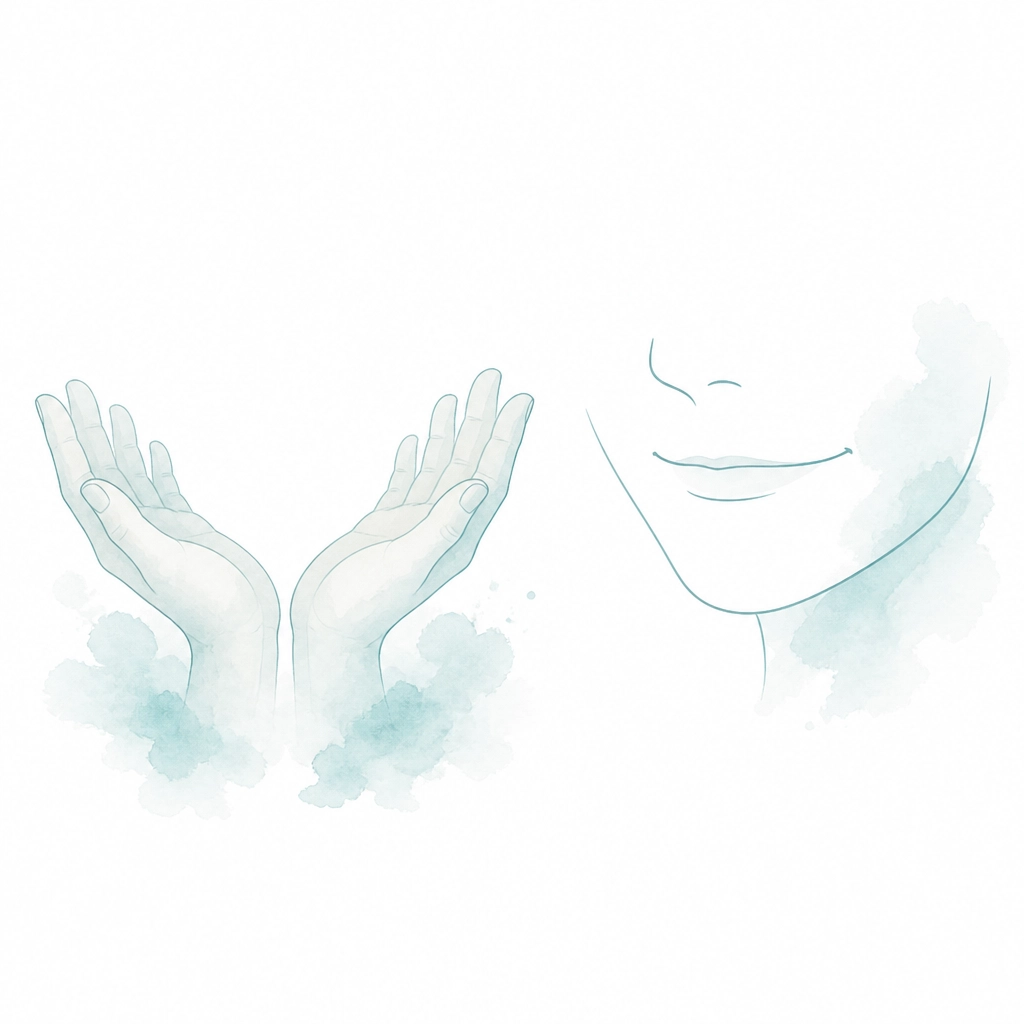
Once your body is a bit more regulated, you can work on the mental stance of willfulness. I love the combination of Willing Hands and Half-Smiling.
Willing Hands involves physically turning your palms upward and relaxing your fingers. It’s very hard to stay mentally willful when your hands are in a posture of openness. Adding a tiny Half-Smile, just a slight softening of the jaw and the corners of the lips, sends a signal to your brain to drop the defenses.
Check the Facts
Finally, use Check the Facts. Ask yourself: “Is the person in front of me actually a threat right now, or am I reacting to an old story?”
When I’m with my spouse, I have to remind myself that he is not the person who hurt me forty years ago. When I’m talking with my mom, I have to acknowledge that the situation is devastating, but being willful toward my family member won’t make my mother any healthier. It only makes the time I have left with her more painful.
A Soft Landing
If you’re feeling stuck today, please be gentle with yourself. You aren’t “bad” for being willful, and you aren’t “broken” for freezing. You’re a sensitive human being navigating a very complex world.
At DBT Path, we offer a “Cozy Learning” environment where you can learn these skills without the pressure of group therapy or personal sharing. Our 36-week program consists of about one hour of live class and about one hour of self-paced study each week.
It’s a lecture-style, classroom environment where you can submit questions privately and receive personalized homework feedback from me and my team. We have been doing this since 2013, and we would love to support you in your journey of healing.
Ready to start your journey?
Join DBT Skills Classes or dive into the Willingness skill page. You don’t have to stay frozen forever. There’s a path forward, and we’re here to walk it with you.
This post is psychoeducation, not therapy or crisis care. If you’re in real distress right now, please reach out to a qualified mental health professional or call or text 988 for immediate support. You deserve live, human help when you need it.
You deserve a place that can hold your story
If reaching out feels hard, that makes sense. DBT Path gives you real human support and skills you can trust, at your own pace.
Join a class

Leave a Reply
Want to join the discussion?Feel free to contribute!